


I must confess that the first rendition of this article was a rather bleak one. Not for the first time, I had my five-minute walk back from dinner hijacked by one of The Gambia’s local ‘bumsters’ (young men who spend the best part of their day selling spliffs and the worst of it smoking them) and his offering of ‘Bob Marley time.’ Being the dignified fellow I am, I declined but was left disgruntled and renewed of my frustrations at Africa.
Trivial though they may be, and today not foreign to our own streets, encounters like the one on my walk represent the very plainness of problems in sub-Saharan Africa. There is no good reason why those bumsters should not be manning the assembly line of a newly built manufacturing plant in the countryside, or harvesting the latest wave of soursop ready to be turned into powder form, flogged off to Erewhon, and sold as a sort of left-wing crack cocaine.
If I were writing this twenty years ago, my frustrations would’ve been met with the apathy and head-scratching of a continent still searching for anything like a model of success.
“The vision of a thriving Africa can no longer be batted away as a delusional utopia.”
In many ways, the Africa known then is the Africa we know today. Its repertoire of images flashes before one’s eyes and then retreats to the recesses of a distant memory. Docile women in their blackened shrouds. Men with ashen bodies and bloodshot eyes. Unwitting children kicking pitiful balls of bottles and bags. The staining blood of untamed red earth.
There is an undeniable truth to it.
A few months ago, a ferry sat paralyzed at the mouth of the River Gambia for fourteen hours. On board was an ambulance carrying a young mother who had only given birth hours before and was in desperate need of blood. But given the lack of even a mere hint of intervention, one might barely have noticed.
As the director of the health facility the woman had just left recounted the macabre ordeal to me, my eyes met his just long enough for me to discern their frail jitters cast in an otherwise stony mold. I need not finish his story.
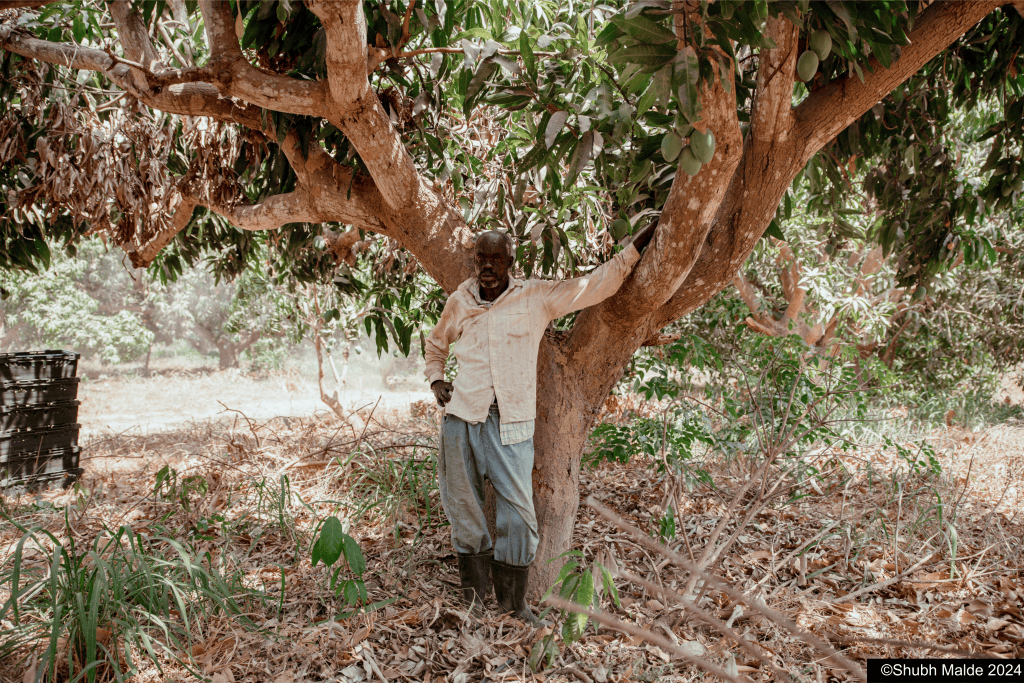
Twenty years ago, that director would’ve been filled with the apathy I mentioned earlier. But today there is hope. Today, one can look, certainly not at all, but at least at some of Rwanda, Tanzania, Zambia, Botswana, and Mauritius and see that the vision of a thriving Africa can no longer be batted away as a delusional utopia.
Yet still, hope is fickle. And in Africa, the real battle starts when the pain goes away.

Pain has been Africa’s constant. Traveling into South Africa, a single snapshot can present great hills and kloofs—with birds rare and glamorous—as well as the ironhearted plateaus into which they bleed. Those grand appearances, however, masquerade for a hostile reality. Far from the oafish ideals of Hollywood and Wakanda, political strife here is much less settled by mêlée carapaced with the refined intersection of tradition, technology, and nature than by twelve-year-olds with AK-47s as big as themselves and the groomings of Moscow and Beijing.
“They make a desert and call it peace.”
And then there’s the C-word. My forefathers first arrived on Kenyan shores almost a hundred years ago to the day alongside a hopeful delegation of emigrants from India. In their wake, they had left a country made decrepit by men with galactic stomachs and handlebar mustaches. But the British Empire had arrived quite differently in Kenya as it did in India, and a new sense of order and opportunity in the former offered ample attraction away from the latter.
Not long after the African independence movements of the 1960s, my family, who with other immigrants like them had contributed greatly to the economic vitality of East Africa, left for Britain. But for all that it had brought—medicine, schools, common law, technology—the blights of empire were there for all to see.
For though they are lesser known there than they are in the West, the words of Tacitus, 1,800 years later, still cast scorning judgment on the forced labor camps of Angola and the genocide in the Namib: Ubi solitudinem faciunt, pacem appellant. They make a desert and call it peace.
But how much of this can excuse slavery in Sudan today, or Darfur and the comfort of its struggles? Why freedom in this part of the world is more benighted than in any other? The helpless woman on the helpless ferry?

“Britain’s socialist crackpots had found the perfect vessels for their socialist drivel in Africa’s new generation of Western-educated leaders.”
“In rejecting the capitalist attitude of mind which colonialism brought into Africa,” said Julius Nyerere, the first president of Tanzania, in 1963, “we must reject also the capitalist methods which go into it.”
And so, from Dakar to Dar es Salaam, it was said and it was heard. Britain’s socialist crackpots had found the perfect vessels for their socialist drivel in Africa’s new generation of Western-educated leaders. In the decades that followed independence, much of Africa was condemned to a living standard worse than what existed before it.
Not everyone followed suit, however. Success was there to be sought, albeit in a different way than Africa’s socialist fathers had in mind.
Botswanans will tell you of Seretse Khama, who restored the economic and individual liberties of its unique pre-colonial institutions. At the time of independence, the landlocked country was the third poorest in the world. It didn’t have a military until eleven years later and would’ve had to rely on the blunt force of projectile watermelons in the event of an invasion. But in the half-century that followed, Botswana’s economy grew ten times faster than the rest of the world.
And there was Felix Houphouët-Boigny and the ‘Ivorian Miracle’ which saw the Côte d’Ivoire achieve one of the highest per capita incomes among Sub-Saharan states without oil. The phenomenon was not so much considered a miracle because it was unexplainable as it was for being unusual. The country’s well-being was, in fact, very simple to explain.
Where there is freedom, prosperity will follow.

“It seems Black Lives Matter does not extend to the billion black lives in Africa.”
For Westerners, Africa has become a goldmine for cheap virtue. Troughs in corporations’ virtuosity credit are aptly solved by posting photos of their pastiest-looking employees amidst scores of animated schoolchildren who are usually just flabbergasted to discover humans can look so ghoulish.
“They come but they do not care,” I was told by one local businessman who offers city safaris to tie-dye sporting nonconformists once every other month. “They come not for us, but for themselves.”
The climate offers another channel for ‘guilt-shipping.’ Though eventually Germany and Britain, amongst others, caved into reopening their coal plants, Botswana, to take one familiar example, experienced so much European demand for coal since Russia’s 2022 invasion of Ukraine that it is ramping up exports threefold.
At least we can take solace in the fact that Africa is, on the whole, an environmentalist’s nirvana. In fact, so green is the agenda in Africa that John Kerry is said to have broken spontaneously into a rapturous rendition of the Congolese rumba upon arriving in Kinshasa ahead of COP27 and learning that 80% of Sub-Saharan Africa’s fuel (bar South Africa) is renewable.
If only he knew it is not solar and wind, but rather wood and dung, being used. And I doubt work conditions in the DRC cobalt mines that fuel his fixation with lithium batteries meet the standards of OSHA office goblins. It seems Black Lives Matter does not extend to the billion black lives in the world’s second most populous continent.
Africa, as with all of the developing world, will need to rely on fossil fuels to break out of poverty if it is to do so any time soon. There is simply no better alternative for cheap, clean, and reliable energy.
Thankfully, Africa is already taking some of the necessary steps. All African Union countries bar Eritrea have ratified or officially supported the African Continental Free Trade Area agreement. By 2035, the agreement is projected to have removed 97% of tariffs on trade between member states, boosted continental GDP by $450 billion, and lifted almost 100 million people out of extreme and moderate poverty.
So, there is a way. Beneath the ever-passing glare of ragged children and bureaucratic bust, hopeless wars and economic blight, there lies a continent of great might. Letting Africa slip by in the face of weak foreign policy, pity, or self-absorbedness would be a painful loss for the human race. That, for our world’s most youthful place? That is dereliction.
* The views expressed in this article solely represent the views of the author, not the views of the Chicago Thinker.
Please, for the love of God, learn to write better. Regardless of whether the substance of your piece is good, your prose comes off as awfully pretentious and self-absorbed, which distracts from any points you’re trying to make. This has been the case for all of your articles (with the exception of your open letter on the Israel-Hamas war, which was marginally better). If the author is reading this, do better, and if any Thinker editors are reading this, improving the writing quality of articles is literally your job, so also do better.