

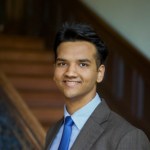

Chicago Thinker staff member Shubh Gupta recently sat down with Harald Uhlig, Professor and former head of the Department of Economics at the University of Chicago, to discuss Prof. Uhlig’s views on topics ranging from tariffs and monetary policy to college and intellectual courage.
Gupta: What are, in your opinion, some of the greatest achievements of the Chicago School of Economics, and what place does the Chicago School have in today’s economic policy landscape?
Uhlig: On the inside, a number of my colleagues insist that there is no such thing as a “Chicago school of economics.” Every one of us does (their) own research, and we frequently disagree on many things. There are no marching orders given in the morning or guidance on where our research should go. That said, of course there was a “Chicago School of Economics,” with its emphasis on free markets and its skepticism regarding government intervention, with Milton Friedman the most iconic representative. I am sure colleagues disagreed then too – they just found themselves in agreement on these basic principles. This was all before my time here. That Chicago School was enormously influential on economic policy. Coming from Germany, let me point to the intellectual leadership of the Chicago School on the superiority of capitalism over socialism, contributing to no small amount to the breakdown of socialism in Eastern Europe. It truly helped change history for the better. I am gravely concerned and astounded that so-called “democratic socialism,” which once was the basis for the repressive regimes in Eastern Europe, finds increasing adherents again among a number of politicians and young voters. I don’t see our faculty speaking up against it in the public sphere forcefully enough. Perhaps some of us should. These days, I feel that our faculty is much less visible and more dispersed in the economic policy landscape.

Uhlig publicly criticized the Black Lives Matter movement’s calls for defunding the police. This prompted a response from Lisa Cook, a professor of economics at Michigan State University at the time, who tweeted “I hope the UC (UChicago) investigation results in removing yr (your) access to students.” In 2022, when President Biden appointed Cook to the Federal Reserve Board of Governors, Prof. Uhlig published an opinion in the Wall Street Journal criticizing her appointment. Cook’s tenure has since faced legal challenges from President Trump’s Department of Justice, though courts have upheld her appointment.
You had opposed Lisa Cook’s appointment to the Federal Reserve Board of Governors in the Wall Street Journal. How do you see the Trump administration’s mortgage fraud allegations against her?
It will be interesting to see how this all plays out. If the mortgage fraud allegations turn out to be correct, then I hope that she finds the grace of resigning from the Fed on her own rather than damaging that institution further. It simply is not a good look to have someone who committed financial fraud as a member of the key decision making body on financial regulatory matters and monetary policy. The appointment of Lisa Cook was strange to begin with, given her lack of any expertise concerning these areas. It is hard to see that her removal would be damaging to the Fed, as long as the central issue of Fed independence is carefully maintained.
How do you see Jerome Powell’s resistance to political pressure for lowering interest rates?
Jerome Powell and the Fed should do what they deem best to fulfill their dual mandate of promoting maximum employment and stable prices. We know from the path-breaking work of Kydland and Prescott, 1977, for example, that commitment to low inflation is the only way to actually achieve low inflation. There is always the temptation to cheat on expectations that get built into labor contracts, and raise inflation ex post to help the economy in the short term. There is no way to keep doing that and keep fooling people all the time. Once they catch on, once inflation expectations destabilize, it will be very hard and costly to bring inflation back down, as we learned in the early 80s.
So how can the Fed demonstrate that they are truly committed? Simple: show that it resists political pressure. The Bundesbank in Germany has done that masterfully in its past, and various politicians have burned their fingers or upended their careers by trying to twist its arms. They said, the Bundesbank is like cream: whip it, and it becomes stiffer yet. Resisting political pressure enhances needed credibility – and for that, political pressure needs to be there in the first place. Ironically, the pressure from the Trump administration may ultimately aid in building that credibility and achieve low and stable inflation, provided the Fed can show it is immune to that pressure. Of course, its actions need to be well justified by economic conditions and the future outlook. For that, one needs experts on monetary policy on board at the Fed. The bigger damage comes from appointing people to the board who do not have that expertise.
What are the biggest risks to the U.S. and global economy over the next decade?
Downside risks arise from several sides. One is the potential for conflict with China and the importance of rare earth imports from China for smooth functioning of the economy. China is catching up fast on key technologies. Perhaps many of us will drive electric cars from China in the near future. This will not be much different from driving a Toyota or Hyundai. There is nothing wrong with that in principle, but we have to be cognizant of how to maintain our high standards of living in the U.S., how to find new technological advances, how to help new sectors with good job opportunities and how to help those losing out on those changes. I see downside risks in the increased political fragmentation of the United States, with key principles no longer being commonly agreed upon, and with people viewing the other side as dangerous extremists. This can substantially weaken the United States down the road, and, by implication, the political world order: in fact, it already does. I see risks in the rise of A.I. The downside risk is that we become dependent on impossible-to-control machine parks of a few large A.I. companies, prescribing the news that we see, the lives that we live and upending the careers of many who have become replaced. The upside risk is that A.I. will vastly improve our lives by taking over complicated, but boring tasks, so that humans can focus on the more creative and enjoyable parts of life all the while living at a higher standard of living. The latter has mostly been the story of technological progress so far, and I hope and believe it will be true once again. The downside risks are greater this time around, though.
Will tariffs help the American economy?
There is a large and well-studied body of literature on “optimal tariffs,” according to which a large importing country like the U.S. can improve its terms of trade and benefit its national welfare via the introduction of appropriate tariffs. Think about it that way: The U.S. imports lots of computers from China, and China sells a lot of its computers to the U.S. Now, suppose the buyers in the U.S. get together and decide to buy less of them. That may force China to lower its prices, which is a good thing for U.S. buyers. An import tariff accomplishes this indirectly. People buy less, though now at higher prices. But their taxes can now be reduced, due to the tax revenue arising from tariffs – and the reduction of labor income taxes, say, may then encourage employment and raise output. This all depends on whether the other side will engage in retaliatory tariffs, and therein lies the rub of optimal tariffs, but that may be up to bargaining. The tariffs have also been used as a bargaining chip to reduce implicit or explicit tariffs already in place at the other side or they have been used to exert geopolitical influence. There are redistributional consequences too: the tariffs may help workers in some industries, while perhaps hurting consumers elsewhere, and it may be a second-best redistribution policy to a first best that never happens. I wish that the discussions by prominent economists on the introduction of tariffs by Trump had laid out these issues and the case for optimal tariffs first, and clearly delineated what we know, and how well we know it, rather than engage in grandstanding and fundamental opposition for political and not scientific reasons. Ultimately, as economists, we tend to like free trade, and so do I, but it seems to me that the claims regarding the huge damages to be expected are way overblown. We have not been in a free trade world in the first place and with some trading partners, it may actually move us closer. We need more nuance in this debate.
Which thinkers – past or present – most influence your intellectual outlook today?
When I was young, I read Orwell’s 1984. It left a deep and lasting impression on me, enshrining the central importance of freedom of speech, how it cannot be taken for granted, and the danger of group think. Oddly, support for free speech has eroded quite a bit over the last decades. We spend too much time in our echo chambers, talking to people who are like-minded and punishing the dissenters. But “freedom is always the freedom of the dissenter,” as Rosa Luxemburg famously said. We need to find ways to again respectfully talk to each other, and examine and embrace our disagLater, when I chose to embark on my trajectory to become an economist, I was deeply influenced by the giants of the field, such as my advisor Christopher Sims, and by Bob Lucas, Ed Prescott and Tom Sargent. I learned a lot by trying to figure out why Chris Sims did not buy into the “Lucas critique,” as just one example
What advice would you give to students who fear ideological conformity from across the political aisle? How do you personally define intellectual courage in academia?
The pressure arising from ideological conformity is real, it is not pretty, and many just follow the crowd. Let me start by stating that courage is not necessarily good for you. It entails taking a risk, and taking a risk can be dangerous. You can get hurt. You may suffer. It isn’t always as in the movies, where the courageous hero comes home to be celebrated by all, and vindicated for what he has done. Perhaps we should have a forum with military veterans here, and let them talk about the consequences of courage: how do they see it? We can learn much from them here. That said, ultimately, it should be your inner voice that matters the most. Can you look in the mirror twenty years from now and say, yes, you stood your ground? Can you then say, you chose to do what you believed was right, even if the outward consequences may have been prettier otherwise? This is a very personal choice and it is not an easy one. Plus, it is always easy to justify actions taken in hindsight, to fool yourself. I encourage you to be true to yourself, to believe in yourself, even if no one else does. Perhaps they will come around, but perhaps they will not. “Intellectual courage in academia” means pursuing angles and themes that challenge the prevailing orthodoxy and the mighty. There is a version of that, which is actually rewarded: journals like to publish papers that “challenge the conventional wisdom.” However, if you look closely, these papers still usually play by all the rules, and the “courage” there is then ultimately quite limited. Truly stepping outside is hard, rarely done and can be very risky: see above.
Young people across the United States are increasingly becoming disillusioned with the idea of college. How should students at UChicago view the role of college or university in their lives?
For me, and I hope for students at UChicago and elsewhere, college was an amazing experience. I could experiment with who I wanted to be, and in what direction to think. These are crucial, formative years. I studied mathematics as an undergraduate, with economics as a minor. Studying mathematics was like learning to see track 9 3/4, traveling to Hogwarts and seeing what magic can do – only better. It opened a new world before my eyes, which is hard to describe. If one studies mathematics, it later on seems obvious and one takes it for granted, forgetting how difficult it was to get to Hogwarts in the first place. I see the world differently from someone who has studied, say, chemistry, even though that person may describe a similar experience. College changes your brain, and you get to choose the direction. It takes time, it is not immediately obvious, it is frightening, it is amazing, it is unique. I hope that students here embrace the chance to learn how to think, reject being told what to think, to find their inner voice, to rise to the challenge of thinking independently and to become thought leaders themselves. And, obviously, there is nothing wrong in seeking a good life and thinking ahead of time, which courses, subjects and degrees can help you achieve that.
Note: Prof. Uhlig’s comments have been minimally edited for grammar.